
GBM-CLIMPACT: Development of an end-to-end modeling and analysis toolset to assess climate impact and readiness of water sector in the Ganga, Brahmaputra, and Meghna basins
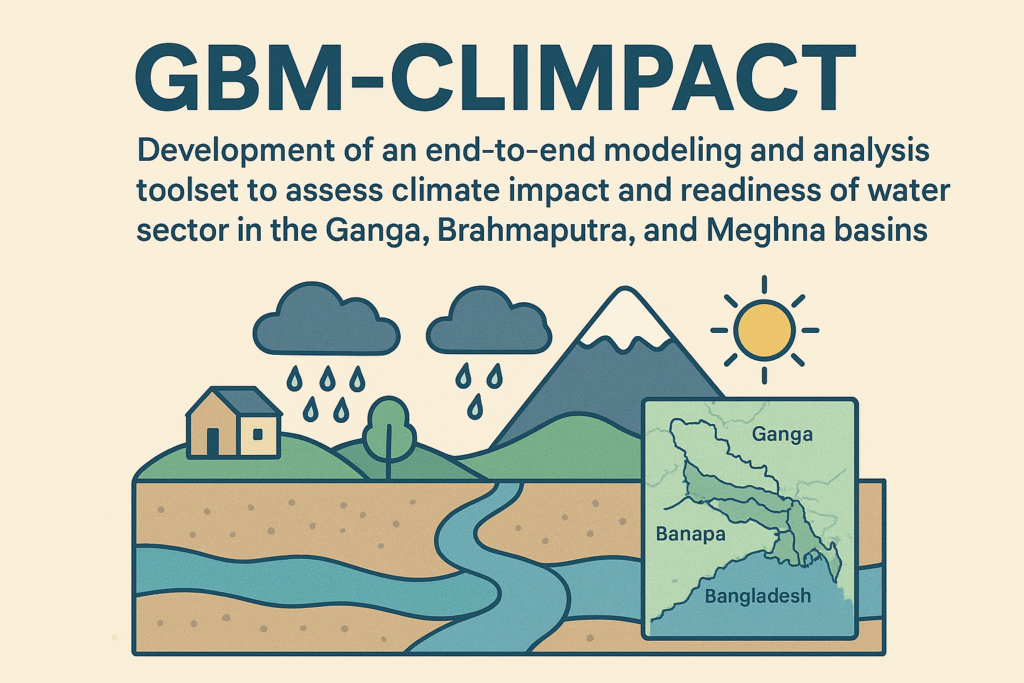
Canadian PI: Dr. Martyn Clark Canadian Institution: University of Saskacthewan Indian PI: Dr. Manabendra Saharia Indian Institution: Indian Institute of Technology (IIT) Delhi Project Summary: The Ganga, Brahmaputra, and Meghna (GBM) is inhabited by 700 million people and is of vital concern for the 5 countries these rivers encompass. Melting of glacier/snow, planned and existing […]
Use of deep learning models to understand the impact of climate and land use changes on future groundwater resources, with a focus on data scarce regions.
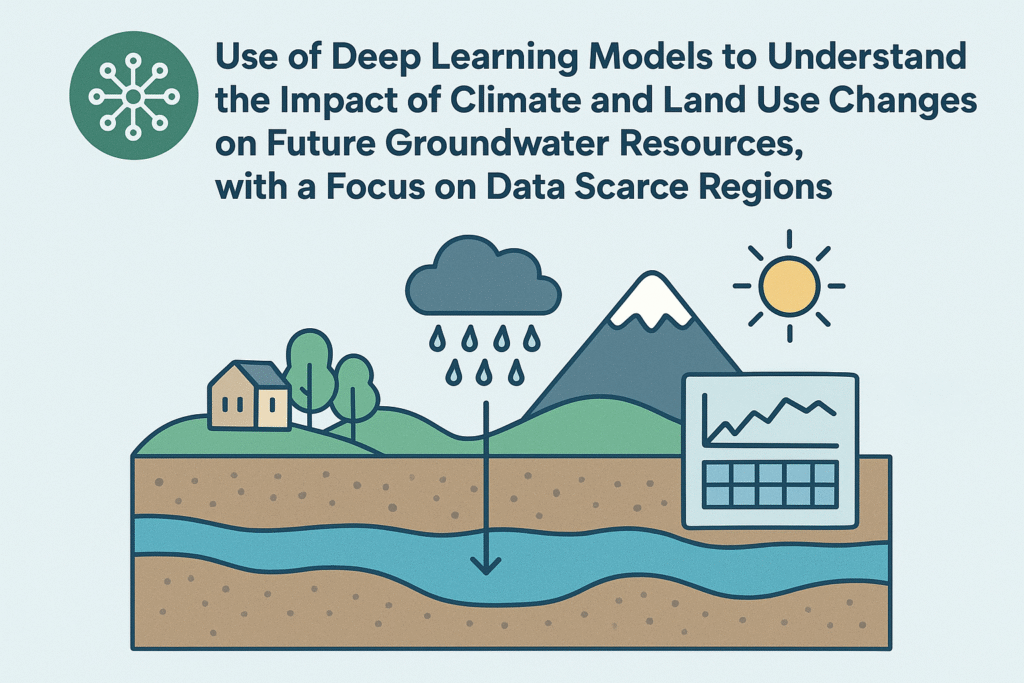
Canadian PI: Dr. Jan Franklin Adamowski Canadian Institution: Mcgill University Indian PI: Dr. R.Maheswaran Rathinasamy Indian Institution: Indian Institute of Technology (IIT) Hyderabad Project Summary: One of the Earth’s greatest freshwater reserves, GW contributes one-third of the world’s available water. Groundwater has long been supporting humans and ecosystems in the world’s arid and semi-arid regions. […]
Machine learning methods for water quality estimation and control in water resource recovery facilities: Towards Circular Economy and Sustainability
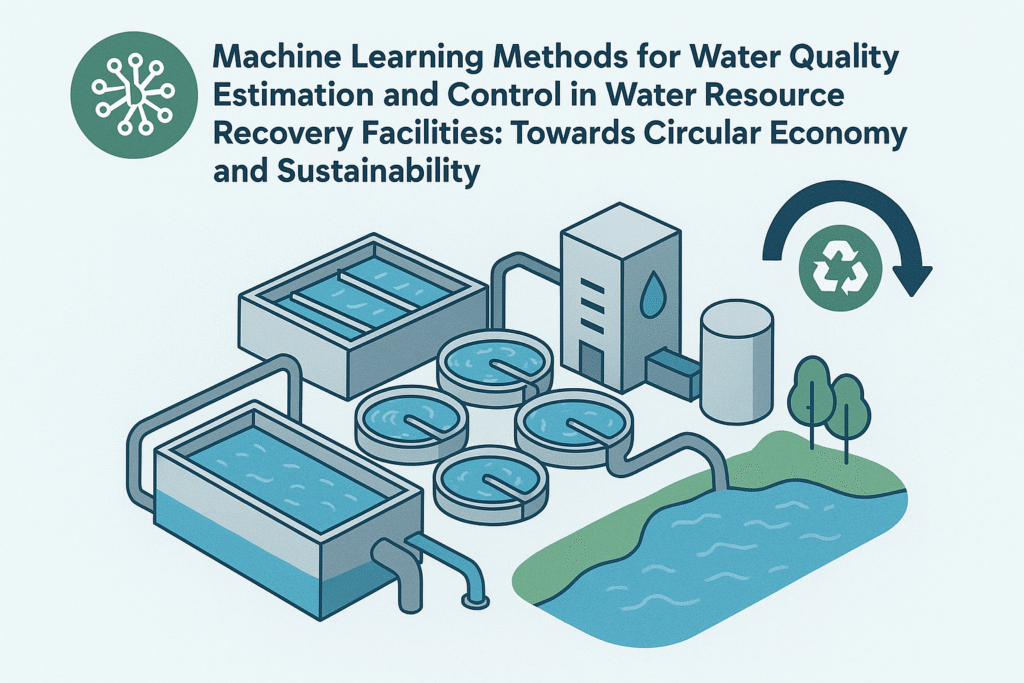
Canadian PI: Dr. Peter Vanrolleghem Canadian Institution: Université Laval Indian PI: Dr. Seshagiri Rao Ambati Indian Institution: Indian Institute of Petroleum and Energy (IIPE) Project Summary: The efficiency of current wastewater treatment plants (WWTPs) is threatened by abrupt changes in the wastewater, strengthened environmental protection goals and is not reaping the benefits of the potential […]
Climate change impacts on the riverine thermal and flow environments under diverse climates of India and Canada

Canadian PI: Dr. Taha Ouarda Canadian Institution: Institut national de la recherche scientifique (INRS) Indian PI: Dr. Shaik Rehana Indian Institution: International Institute of Information Technology (IIT) Hyderabad Project Summary: River water bodies serve as prominent water sources for various purposes including waste load allocation and climate change is the most important driving force affecting […]
Reconfigurable platform for rapid autonomous quantification of pathogens in wastewater using PCB electrode-based assays

Canadian PI: Dr. Richa Pandey Canadian Institution: University of Calgary Indian PI: Dr. Siddharth Tallur Indian Institution: Indian Institute of Technology (IIT) Bombay Project Summary: Whilst limiting close human contact and social activity were highly effective in reducing transmission levels of virus outbreaks before vaccines were widely available, these measures were difficult to meaningfully implement. […]
Phosphorous Recovery from Wastewater for Safeguarding Global Phosphorous Sustainability and Food Security: Denitrifying Phosphorous Accumulating Organisms (DPAOs) have the Merits.

Canadian PI: Dr. Qiuyan Yuan Canadian Institution: University of Manitoba Indian PI: Dr. Prangya Ranjan Rout Indian Institution: Thapar Institute of Engineering Technology Project Summary: Phosphorus, a critical plant nutrient is produced through mining of phosphate rocks, which is a non-renewable natural resource. It is predicted that after a couple of decades, the phosphorous supply […]
Next generation epidemiological models for accurate predictions of future pandemic waves: integrating sewer simulations with public health information using machine-learning algorithms

Canadian PI: Dr. Ajay Ray Canadian Institution: Western University Indian PI: Dr. Sridharakumar Narasimhan Indian Institution: Indian Institute of Technology (IIT) Madras Project Summary: Wastewater-based epidemiology (WBE) has been proven as a very effective tool for implementing rapid response to pandemic events including dynamic social-distancing policies. However, WBE calculations are potentially affected by large errors […]
Testing and Upscaling Phytoremediation Technology in Real-World Conditions

This technology deployment will establish and evaluate phytoremediation technology and explore the social acceptability of this technology by local communities. Four sites have been targeted for this demonstration, two in Canada and two in India. This project will be tested in real-world conditions and demonstrates the balance between discovery and application-based research to solve the […]
Contaminated Land Reclamation Using Hybrid Absorbable Landscape And Native Plant Species

Many of the earth’s natural resources are subjected to heavy pollution, posing a major problem worldwide. When looking at potential solutions to these issues, it is necessary to choose methods that do not further damage the environment and instead choose ecological approaches to cleaning the earth. Dr. Rishi Gupta (University of Victoria)’s Low Impact Development […]
A Floating Treatment Wetland System for Removing Contaminants from Rivers and Streams using a Biomimicry Approach

This project aims to inspire stakeholders to adopt simple, sustainable and effective technologies for wastewater treatment and to promote the safe use of wastewater for agriculture. A large number of HQP participated in the installation and ensured that a Biochar-based pipe filtration system resulted in improved water quality parameters. The filtration system was able to reduce […]